The latest analysis has upped the figures for the amount of radioactivity released during the accident at Fukushima Daiichi, although the estimate for the main long-term contaminant, caesium-137, was actually reduced.
The International Atomic Energy Agency (IAEA) is implementing a Technical Cooperation project, bringing together 24 countries in the Pacific Ocean region to help monitor the fate of radionuclides released from the Fukushima nuclear accident.
.jpg "Fukushima dispersal dose map, Feb 2012 (77x48)") The latest analysis has upped the figures for the amount of radioactivity released during the accident at Fukushima Daiichi, although the estimate for the main long-term contaminant, caesium-137, was actually reduced.
The latest analysis has upped the figures for the amount of radioactivity released during the accident at Fukushima Daiichi, although the estimate for the main long-term contaminant, caesium-137, was actually reduced.
 Nuclear regulators in the USA and Canada are investigating an incident at a Canadian uranium refinery when the lid of a drum containing uranium oxide from a plant in the USA blew off, leading to the exposure of three workers to airborne uranium.
.jpg)
 Work to assemble the giant arched structure that will protect the ruined Chernobyl unit 4 and enable its dismantling has officially begun on the 26th anniversary of the accident.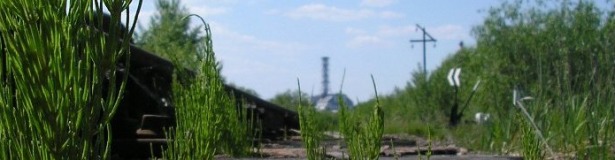
.jpg "Sylvain Costes (Berkeley)") Results from America's Berkeley National Laboratory have cast doubt on the assumption that risk from radiation is always proportional to exposure – a theory that underpins most measures for radiological protection.
Results from America's Berkeley National Laboratory have cast doubt on the assumption that risk from radiation is always proportional to exposure – a theory that underpins most measures for radiological protection. An area of extremely high radiation has been found at Fukushima Daiichi in a filtration system that helped to reduce emissions from the reactor accident. Meanwhile, new water treatment equipment is starting trial operation.