_83147.jpg)
The memorandum of understanding outlines a roadmap to commercial fusion in Europe that begins with building demonstration stellarator Alpha near the Max Planck Institute for Plasma Physics (IPP) in Garching. When operational in the 2030s, Alpha will become the first stellarator to demonstrate net energy gain, meaning its plasma will generate more energy than it consumes. The demonstration stellarator will additionally allow Proxima and its partners to test and validate key fusion technologies under real-world conditions and in shorter development cycles, accelerating the path to building the first stellarator fusion power plant, Stellaris.
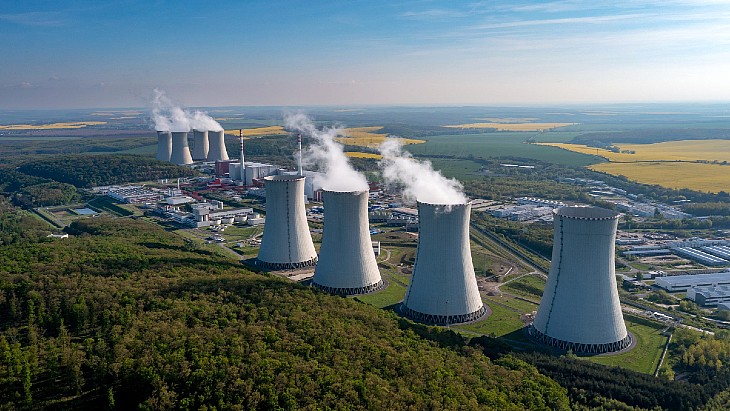
The Stellaris commercial power plant is planned for the site of a former Gundremmingen nuclear power plant, currently being decommissioned by RWE.
Under the MoU, the Free State of Bavaria, Proxima Fusion, RWE and IPP will work together on site selection, permitting and regulatory processes, project structure, and financing. IPP will lead on plasma physics and the scientific leadership of demonstration stellarator Alpha. Proxima Fusion will lead on engineering, public procurement processes, and construction. RWE will contribute its extensive experience in the construction and operation of complex power plant facilities, as well as its strong global industrial network.
Proxima intends to finance about 20% of the project's total costs through private international investors. Subject to federal funding, the Free State of Bavaria has indicated a potential state co-financing contribution of 20%. RWE has also signalled its willingness to participate financially within the framework of the MoU.
"All four partners are pooling their efforts to maximise chances of success in securing federal funding under the High-Tech Agenda Germany," Proxima Fusion said.
_da6364c4.jpg)
The Stellaria concept (Image: Proxima Fusion)
"This MoU is a milestone that visibly positions the European fusion industry on the global stage," said Proxima Fusion Co-Founder and CEO Francesco Sciortino. "It marks the starting point of an industrial ecosystem that consolidates existing and new know-how in Europe and anchors value creation here. This marks the beginning of a long-term industrial growth trajectory over the coming decades, creating new export opportunities for Germany and Europe. With Alpha in Garching and Stellaris in Gundremmingen, we are, for the first time in Europe, connecting world-class research, privately financed and publicly supported high-tech innovation, and its industrial implementation at a single location. Bavaria is therefore evolving from a research hub into a foundational location for the fusion industry."
Markus Krebber, CEO of RWE, added: "The potential of fusion technology for the energy supply of the future is enormous. Thanks to an excellent research landscape and the start-ups that have emerged from it, such as Proxima Fusion, Germany can take on a key role. That is why it is good that the federal and state governments are jointly pushing this topic forward in order to build the world's first commercial fusion power plant in Germany. We at RWE are happy to support this. Our decommissioning site, with its existing infrastructure combined with our operational expertise, offer ideal conditions to give Germany time and cost advantages in international competition."
Alpha Alliance
On Wednesday, Proxima Fusion announced the launch of the Alpha Alliance, an industrial consortium bringing together more than 30 leading European and international companies to the Alpha demonstration stellarator, which will validate the manufacturing methods, materials, and high-performance systems required for future stellarator-based fusion power plants.
_3c05d930.jpg)
Alpha Alliance members (Image: Proxima Fusion)
"The Alpha Alliance was formed to ensure industrial delivery of Alpha by coordinating manufacturing, system integration and supply chains," Proxima Fusion said. "Members contribute capabilities across materials, components, assembly and infrastructure needed to industrialise and scale fusion systems ... Anchored around this defined engineering milestone, the Alpha Alliance provides a structured framework to prepare Europe's industrial base for not just delivering Alpha but for deploying fusion at scale. This approach supports targeted investment, shortens learning cycles, and accelerates the build-up of a competitive fusion supply chain."
Members of the Alpha Alliance include: AFRY, Air Liquide, Ampegon, Bilfinger, Daher Logistik, Diamonds Materials, Dockweiler, Eni, ENSA, DWE, Framatome, Fujikura, Kraftanlagen Heidelberg GmbH, Kraftanlagen Energies & Services SE, Kyoto Fusioneering Europe GmbH, Mühlbauer, Pfeiffer Vacuum GmbH, ProBeam, Research Instruments, Rolf Kind, RWE Nuclear GmbH, Siemens Energy, SIMIC, Thales, THEVA Dünnschichttechnik GmbH, TRUMPF, TÜV Rheinland, VIA Electronic, Wälischmiller Engineering GmbH and Walter Tosto.
A stellarator fusion reactor is different to a tokamak fusion reactor such as the Joint European Torus in the UK or the ITER device under construction in France. A tokamak is based on a uniform toroid shape, whereas a stellarator twists that shape in a figure-8. This gets round the problems tokamaks face when magnetic coils confining the plasma are necessarily less dense on the outside of the toroidal ring.
Germany's fusion ambitions
On 1 October last year, the German cabinet announced it had approved the federal government's action plan aimed at accelerating commercial fusion deployment in Germany. By 2029, more than EUR2 billion (USD2.4 billion) will be invested in fusion research, as well as the development of new research infrastructures and pilot projects. The Fusion Action Plan implements a flagship measure of the High-Tech Agenda Germany - announced in July 2025 by the Federal Ministry of Research, Technology and Space - in fusion, identified as one of six critical future technologies for the country.
In September 2023, then Federal Research Minister Bettina Stark-Watzinger announced that Germany would significantly increase research funding for fusion with an additional EUR370 million over the next five years. Together with funds already earmarked for research institutions, the ministry will provide more than EUR1 billion for fusion research by 2028. The move was aimed at paving the way for the first fusion power plant to be constructed in Germany by 2040.


_55605.jpg)