With a population of almost 700 million people, Southeast Asia is home to about 9% of the world's population and accounts for about 4% of the world's GDP. Over the coming decade, the region is expected to account for about 20% of global energy demand growth.
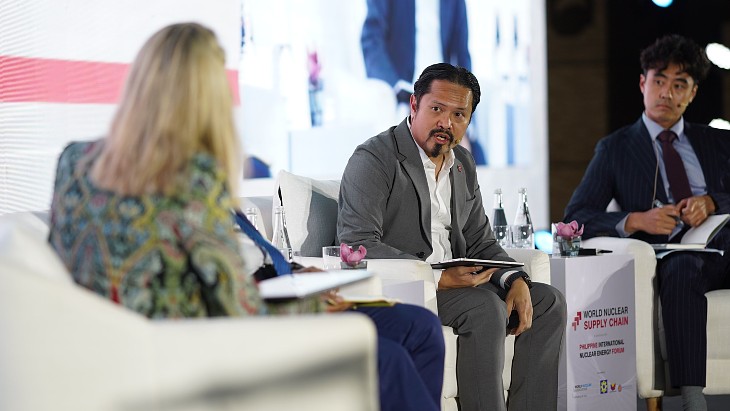
"Over the past 10 years, since 2015, electricity demand in Southeast Asia has been growing by about 6% per year on average," said Yinglong Teng, Energy Analyst at the International Energy Agency (IEA) Regional Cooperation Centre. "That is almost double the global average. And we expect this trend to continue into 2035 with electricity demand growing faster than overall energy demand."
He said that gas remains a part of power development plans in the region and is still going to be a part of the energy sector in the future. "But as the world faces a second major gas supply crisis in the past five years, it might lend additional impetus towards diversification of fuels and power technologies - a move towards domestically available sources of power, and also a strengthening of the case for electricity.
"Today there's no nuclear power capacity in Southeast Asia. Several countries have set clear targets, while others are considering the technology for the first time to 2050."
Teng noted that if all national targets were met, nuclear could add about 30 GW of new capacity by 2050, which could generate enough electricity to meet about 8% of electricity demand growth over this period. "But I think importantly, nuclear can also displace a substantial amount of coal and gas in the power sector," he said.
Teng added: "We think that nuclear can play a meaningful role in meeting energy demand growth, diversifying the power sector and also improving energy security in Southeast Asia. Of course it's a significant undertaking. It's a multi-generational commitment and a decision which must be considered carefully. And if the answer is to go ahead with nuclear power, it requires long-term commitment and long-term policy and regulatory stability to support the sector as well."
Nuclear under consideration
The changing geopolitical landscape is adding urgency to discussions about the region's future energy mix, said Razib Dawood, executive director of the ASEAN Centre for Energy (ACE).
"Nuclear is such an important answer for a lot of issues that we are grappling with here," he said. "The recent crisis in the Middle East has awakened us. Previously we talked about cleaner energy transition, but today we are talking about energy security."
He said that under the ASEAN coordinated target scenario, in which demand for energy in the region would grow four-fold between now and 2060, 32.7 GW of nuclear generating capacity will be required by 2060.
Dawood said Southeast Asian countries had shown intermittent interest in nuclear energy but were now seriously considering it. He expressed confidence in this renewed interest, saying discussions covered vendor cooperation, technologies, the entire supply chain, skills and workforce development, with all aspects to be addressed.
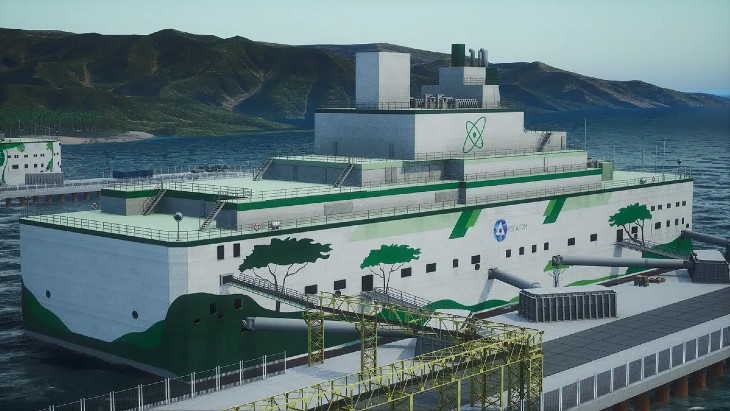
He noted that Indonesia recently announced plans for 200 MW of capacity from floating power plants to one of its islands, while Vietnam has announced plans for 2.4 GW of nuclear generating capacity. Meanwhile, the Philippines, Thailand, and Malaysia are developing targets or considering nuclear options. In addition, Singapore has begun exploratory studies into viable nuclear options.
ASEAN intends to address supply chain, skills, financing, regulation, safety, safeguards, and public acceptance. Dawood said public engagement and compliance with International Atomic Energy Agency (IAEA) infrastructure milestones were identified as necessary. He said regional cooperation was positioned as the mechanism for faster, better-informed national decisions. "We are sharing information, you know, what other countries' experience, to develop the law, the framework, selection of the vendors, engaging with all the important parties."
Malaysia assessing nuclear
The Malaysian government launched an assessment in August 2025 to examine the role of nuclear energy as part of the country's energy mix. MyPOWER Corporation - a special purpose agency under the Ministry of Energy Transition and Water Transformation - has been given the responsibility to coordinate the preparation efforts.
"I believe that Malaysia is actually under Phase One which is under consideration under the IAEA milestone approach," said Shamsul Amri bin Sulaiman, Chief Technology and Engineering Officer from state-owned power company TNB Genco. "And now under our new NEPIO (Nuclear Energy Programme Implementing Organisation), we call it MyPOWER, they are doing the comprehensive national assessment starting last May for 12 months looking into all 19 infrastructure issues. And of course, we in TNB, as the utility, we foresee that we can become the prospective owner-operator."
In 2023, parent company TNB created a nuclear task force, which was converted into a project management office in 2025. Nuclear activities moved under the TNB Genco subsidiary in early 2026, with the ambition to support Malaysia’s first nuclear power plant as developer or operator.
"As we move forward, we can say that readiness is our first strategic investment," Sulaiman said.
The World Nuclear Supply Chain conference is organised by World Nuclear Association and is taking place in Manila on 20/21 October.