_71954.png)
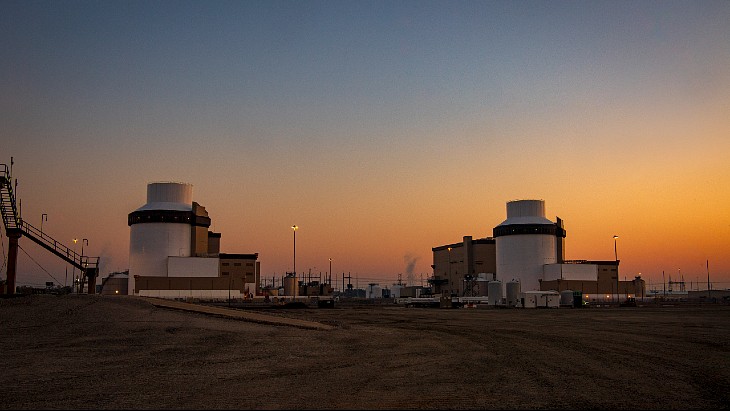
Hot functional tests involve increasing the temperature of the reactor coolant system and carrying out comprehensive tests to ensure that coolant circuits and safety systems are operating as they should. Carried out before the loading of nuclear fuel, such testing simulates the thermal working conditions of the power plant and verifies that nuclear island and conventional equipment and systems meet design requirements.
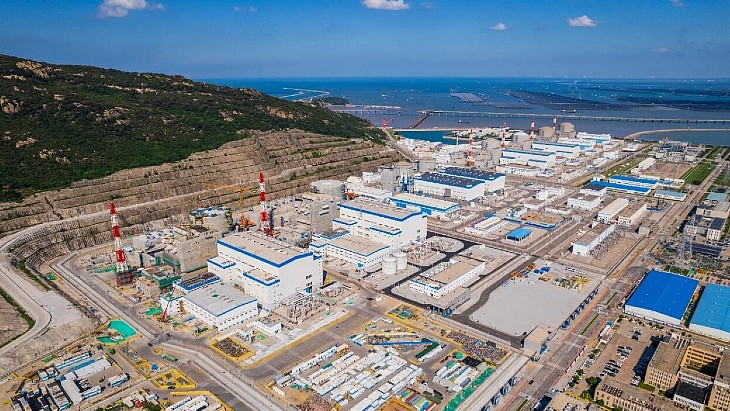
State Power Investment Corporation (SPIC) said the hot tests at Haiyang 3 - conducted by China National Nuclear Corporation subsidiary CNNC Fifth Construction Company - involved 11 temperature rise and fall test platforms, completing a total of 53 commissioning test procedures, 308 test chapters, and 30 periodic tests. The unit successfully completed several transient tests, including the non-nuclear steam turbine start-up and main pump coasting, all on the first attempt, comprehensively verifying the thermal performance, interface fit accuracy, and regulation responsiveness of each system in the unit. The tests were completed on 13 August.
_41abd1e0.png)
(Image: SPIC)
SPIC said the completion of the hot tests "lay a solid foundation for the unit's subsequent fuel loading and first grid connection". The company said it aims to load fuel and connect the unit to the grid "within the year".
The construction of two CAP1000 reactors - the Chinese version of the Westinghouse AP1000 - as Haiyang units 3 and 4 was approved by China's State Council in April 2021. The Haiyang plant is already home to two AP1000 units.
The first safety-related concrete was poured for the nuclear island of Haiyang unit 3 in July 2022. Construction of Haiyang 4 began in April last year. The two units are both scheduled to be fully operational in 2027.
_a9d53863.png)
(Image: SPIC)
Cold functional tests were completed at unit 3 in March this year. Such tests are carried out to confirm whether components and systems important to safety are properly installed and ready to operate in a cold condition. The main purpose of cold functional tests is to verify the leak-tightness of the primary circuit and components - such as pressure vessels, pipelines and valves of both the nuclear and conventional islands - and to clean the main circulation pipes. The tests mark the first time the reactor systems are operated together with the auxiliary systems.
Once fully operational, the four units of the Haiyang plant will generate 40 billion kilowatt-hours of electricity annually, enough to meet the electricity needs of half of Shandong Province's residents, SPIC said. It noted that the site is planned to have six 1,000-megawatt reactors, with space reserved for two future expansions, "making it a 10-megawatt-class nuclear power base".


_33441.jpg)
_51287.jpg)