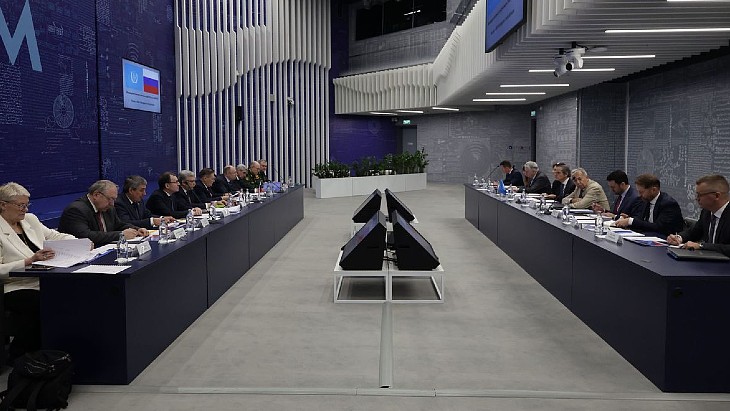
Grossi said the topics covered included the "current safety, security, and safeguards situation" at Zaporizhzhia Nuclear Power Plant, "including the IAEA-brokered ceasefires that enabled repairs to restore the plant's back-up power line".
He added that the presence of agency experts at the plant - which has been under Russian military control since March 2022 and is close to the frontline of Russian and Ukrainian forces - "remains essential to prevent a nuclear accident".
Rosatom said Grossi "was briefed on the ongoing work, jointly with Rostekhnadzor, (Russia's nuclear regulator) to prepare for the launch of the plant's power units, including obtaining the relevant licences from the Russian regulatory agency".
Since December Rostekhnadzor has issued 10-year operating licences for units 1 and 2 of the Zaporizhzhia plant - although Rosatom has said the units will not be restarted while the military conflict continues.
According to the official Russian Tass news agency citing comments made after the talks: Likhachev said that equipment needed to address the plant's water supply issues had already been manufactured; Grossi said he believed electricity generation at the plant can only resume after hostilities end, because there must be no threat to the nuclear facility; and said the IAEA would continue to establish local ceasefires for safety work/restoration of power at the plant.
According to Interfax, Likhachev also said that, regarding restarting Zaporizhzia units, "in terms of electricity sales and electricity use, we are prepared to consider an international and even multilateral format for this activity", although "of course, the state corporation Rosatom will operate and guarantee the safe operation of the station".
Ukraine's long-standing position has been that the best way to ensure safety and security at the six-unit plant is for it to be returned to its control, and put back under its regulatory control.


_51287.jpg)