_57376.jpg)
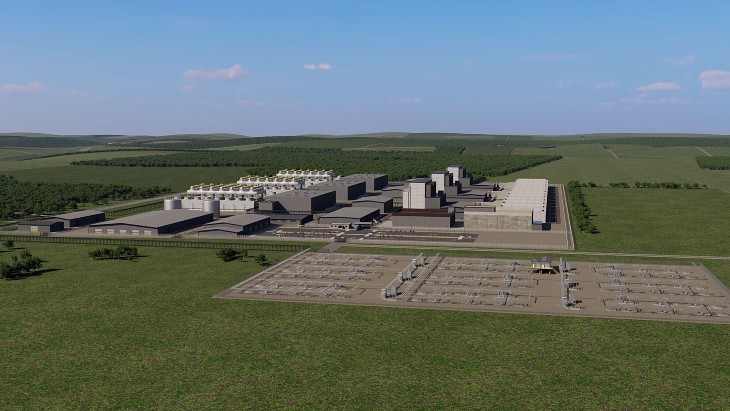
Natura's 1 MWt molten salt research reactor, the LF-MSR, is one of 11 advanced reactor projects selected last year by the Department of Energy (DOE) for the Nuclear Reactor Pilot Program. The programme establishes a new DOE pathway for advanced reactor demonstration to fast-track commercial licensing, expediting the testing of advanced reactor designs that will be authorised by the Department at sites located outside of US national laboratories, and is part of the executive orders signed by President Donald Trump in May 2025.
The DOE's authorisation pathway mirrors many elements of the Nuclear Regulatory Commission's (NRC) licensing framework, including the development of preliminary and final safety analyses for construction and operation (read more about the DOE pathway here). The Nuclear Safety Design Agreement - also referred to as the NSDA - is the first step under the Reactor Pilot Program authorisation pathway. It covers design requirements, safety analysis approach, regulatory engagement process, applicable regulatory requirements, and identifies the key safety decisions for the design.
Natura is developing a demonstration reactor authorised by DOE and separate commercial facilities that would be licensed by the NRC, with the licensing efforts proceeding in parallel. The NRC has been engaged in pre-application activities with Natura since January 2024.
"The NSDA is a critical step in moving from design to deployment," Natura Resources CEO Jordan Robison said. "It reflects years of disciplined engineering and regulatory preparation and positions Natura to advance through DOE's authorisation process while maintaining full alignment with established nuclear safety standards."
In June, Natura entered into a formal agreement with Quadrant Nuclear Industries, Inc to serve as a recipient of high-assay low-enriched uranium (HALEU) for its commercial reactor systems - Quadrant is developing an integrated HALEU production capability in coordination with the DOE and other key stakeholders, with plans for a facility at Idaho National Laboratory designed to produce up to 18 tonnes of HALEU per year. In April, Natura announced 1,000 hours of operation of its Molten Salt Test System, a flowing salt loop that simulates integrated reactor conditions, validating the company's ability to continuously operate a molten salt fuel loop for its reactors.
Abilene Christian University submitted a Letter of Intent to apply for a construction permit for a non-power molten salt reactor to the NRC as long ago as 2020. The NRC granted it a construction permit for a low-power molten salt research reactor of up to 1 MWt, to support academic research, in 2024.


_55605.jpg)