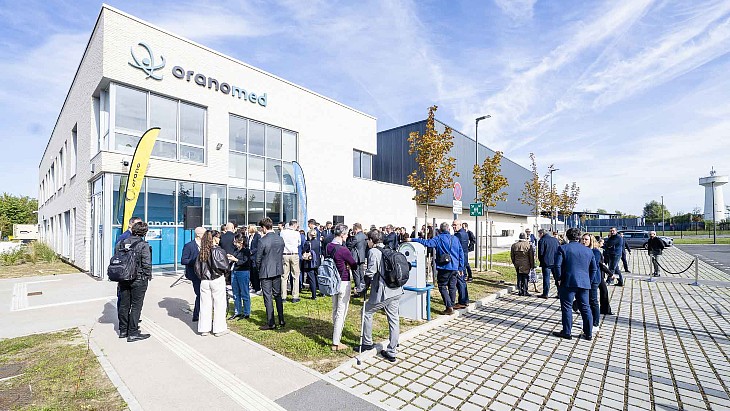
The laboratory, known as ATLab Valaciennes, has been developed by Orano subsidiary Orano Med and will in future be able to produce up to 10,000 doses per year of the new generation of cancer treatments.
The isotope is used in an emerging medical treatment called targeted alpha therapy, in which an alpha-emitting isotope is combined with a protein or antibody that specifically targets and destroy cancer cells while minimising damage to healthy tissue. However the use of these therapies has been constrained by global radioisotope supply shortages.
The EUR25 million (USD28 million) facility, covering 3,000 square metres, received EUR3.8 million (USD4.3 million) of funding under the France 2030 plan.
The half-life of lead-212 is 10.6 hours so the treatments must be produced, shipped and given to patients within 24 hours. It is located within two hours of airports in Paris and Brussels, with Orano saying it can get treatments within the time required "to 70% of the European population".
A similar production facility is also being commissioned in Indianapolis in the US.
Nicolas Maes, Orano CEO, said: "The inauguration of ATLab Valenciennes marks a major industrial milestone for Orano Med and confirms the Orano group's ability to innovate and deploy breakthrough technologies to advance healthcare. This site embodies our commitment to putting our industrial know-how and our expertise in handling nuclear materials at the service of cancer patients, in France and across Europe."
Orano Med CEO Frederic Desdouits said: "The site provides large-scale production capacity designed to meet the logistical constraints resulting from the half-life of lead-212. In the future, the ATLab will enable us to offer European patients new therapeutic options for cancer types with high unmet medical needs."
Orano Med's clinical pipeline currently comprises four programmes, run either independently or with its partners, evaluating treatments across a wide range of cancer types that represent significant unmet medical needs. The company's partners include major pharmaceutical groups such as Sanofi and Roche, as well as Swiss biotech Molecular Partners, with four candidate drugs in clinical development.


_51287.jpg)
_82983_12913.jpg)