_11426.jpg)
In June 2020, the Nuclear Safety Council (CSN) approved the operation of Almaraz until June 2030, as licence renewals are for 10 years. However, given the agreed-upon closure schedule as part of Spain's phase-out of nuclear energy, it was decided to extend operations only until October 2027 for Almaraz unit I and one year later for unit II.
On 30 October last year, the board of operator Centrales Nucleares Almaraz-Trillo (CNAT) officially requested an extension to the operating licence for both Almaraz units. The decision, taken at an extraordinary meeting of the board of directors and the general assembly of shareholders, seeks to extend the life of the two units to June 2030. CSN received a request on 17 November from the Ministry for Ecological Transition and the Demographic Challenge for a mandatory report on the application to modify the operating licence of the Almaraz plant.
The Plenary Session of the CSN has now issued a conditional, favourable report on the renewal of the operating licence for the Almaraz plant.
"The decision adopted by the Plenary Session is based on verification of the plant's proper functioning and the maintenance of an adequate level of safety to continue its operation," the CSN said.
The CSN said it requested the necessary information from CNAT to accompany the application. The operator submitted this information between December 2025 and February 2026. Since then, the CSN's technical team has been analysing this documentation to assess the safety aspects of the facility that it considers necessary for a potential extension of the operating license until 2030.
Among the aspects analysed were the documentation related to the aging status of structures, systems, and safety components, the life management plan, and the environmental rating of equipment. The review also examined compliance with the action and improvement plans associated with the periodic safety review for the full ten-year period, which served as the basis for the previous authorisation renewal, currently in effect.
Similarly, the plant's used fuel management capacity has been assessed up to 2030, and it has been concluded that, with the incorporation of the planned ATI-100 storage facility, along with the existing capacity, there is sufficient storage capacity until the date requested by the operator. Other aspects related to fire protection and human resource management have also been analysed for the same period. In this latter area, the operator is required to maintain adequate minimum staffing levels for safety-related positions.
In total, CSN's report is based on 29 documents prepared by 16 specialist areas of the regulator involved in the process. In addition to these documents, compliance with the conditions and commitments included in the current operating licence has been verified through continuous monitoring and control of the facility by the regulator.
CSN will submit its report to Ministry for Ecological Transition and the Demographic Challenge, which will now be able to make an informed decision regarding the renewal until 2030.
Decision welcomed
"CNAT wishes to reiterate its commitment to continuing the safe, reliable, and efficient operation of the Almaraz Nuclear Power Plant, maintaining the high standards that place it among the best plants in the world according to the World Association of Nuclear Operators," the operator said. "With an annual investment of EUR50 million (USD57 million) dedicated to upgrading, updating, and modernising its equipment, the Almaraz Nuclear Power Plant is technically well-positioned to continue operations - much like the North Anna Power Plant in Virginia, USA, Almaraz's 'twin' facility, which has secured an 80-year operating licence." The two units at Almaraz will have been operating for 47 and 46 years respectively in 2030.
The CSN positive decision was welcomed by Spain's nuclear industry forum Foro Nuclear. "The continued operation of Almaraz in the coming years will help strengthen security of electricity supply, support the stability of the power system and contribute to the achievement of climate objectives," it said. "Its firm, dispatchable and carbon-free electricity production is particularly valuable in a context of increasing electrification, growing integration of renewable energy sources and the need to enhance energy autonomy.
"Foro Nuclear trusts that the final decision will recognise the strategic, social and regional value of Almaraz: a safe and reliable facility that contributes to system stability, competitiveness and decarbonisation, while supporting high-quality employment, economic activity and territorial cohesion in Extremadura."
Phase-out plan
Spain's seven operating nuclear power reactors - Almaraz I and II, Ascó I and II, Cofrentes, Trillo and Vandellós II - generate about 20% of its electricity. Under the country's nuclear phase-out plans, agreed in 2019, four reactors are scheduled to close by the end of 2030 - including the two Almaraz ones - while the remaining three reactors will shut by 2035.
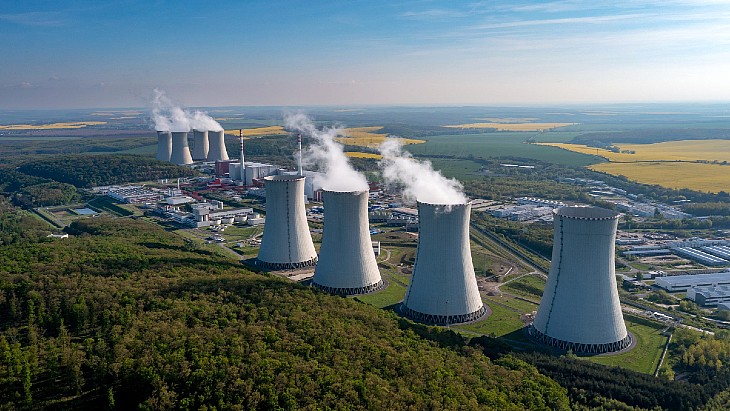
The Almaraz plant currently supplies more than 7% of the electricity consumed in Spain, equivalent to 4 million homes, and employs about 4,000 people. Almaraz units I and II are pressurised water reactors with a net capacity of 1,011 MWe and 1,006 MWe, respectively. Unit I entered commercial operation in 1983 with unit II following the next year. The plant is owned by Iberdrola (53%), Endesa (36%), and Naturgy (11%).


_55605.jpg)