The funding allocated for the programme to 2036 amounts to UAH50.8 billion (USD1.1 billion), of which UAH45.6 billion is to be financed via the state budget and UAH5.2 billion from "international technical assistance".
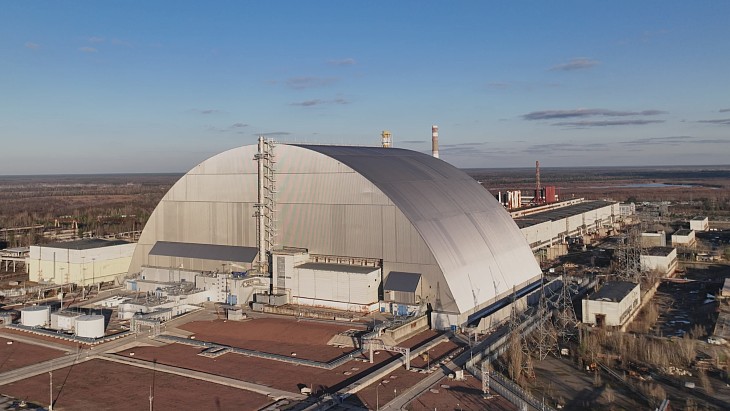
According to the Ministry of Energy, the programme required updating following the completion of the shutdown and preparatory phases of the Chernobyl decommissioning process "to reflect current challenges" including additional measures to tackle the damage caused during the war by the month-long Russian occupation in 2022 and by a drone strike last year to the New Safe Confinement protective arch, "and the actual progress of projects" at the site.
"The next stage involves the direct decommissioning of the plant and the continued transformation of the Shelter Object into an environmentally safe system," a ministry statement said.
"Extending the programme will ensure the uninterrupted continuation of the Chornobyl NPP decommissioning process, support Ukraine's international commitments in the field of nuclear safety, and facilitate the mobilisation of international technical and financial assistance for projects at the plant," the ministry said. (Chornobyl is Ukraine’s preferred spelling). The draft law will now go to the Ukrainian parliament for consideration.
Read more: Chernobyl at 40
The accident, its impact and how it changed the world's nuclear energy industry
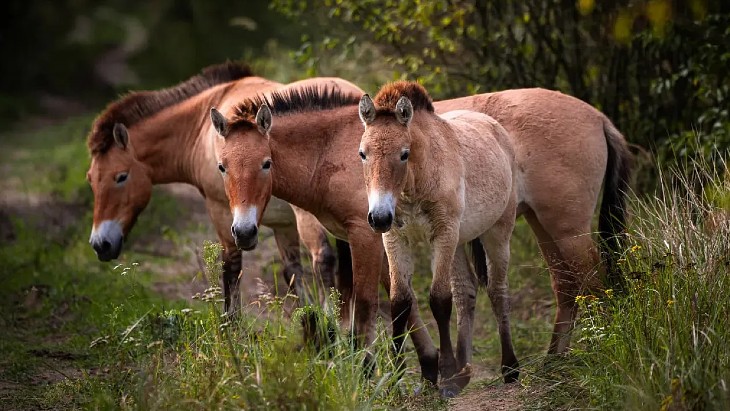
Life and science in the exclusion zone, and Chernobyl's place in popular culture
(Image: State Agency of Ukraine for Exclusion Zone Management)
The decommissioning challenge, and the plan for the future
Background
Chernobyl unit 4 was destroyed in the April 1986 accident (see links above for more details in features published to mark the 40th anniversary) with a shelter constructed in a matter of months to encase the damaged unit, which allowed the other units at the plant to continue operating. It still contains the molten core of the reactor and an estimated 200 tonnes of highly radioactive material.
However that shelter was not designed for the very long-term, and so the New Safe Confinement - the largest moveable land-based structure ever built - was constructed to cover a much larger area including the original shelter. The New Safe Confinement has a span of 257 metres, a length of 162 metres, a height of 108 metres and a total weight of 36,000 tonnes and was designed for a lifetime of about 100 years. It was built nearby in two halves which were moved on specially constructed rail tracks to the current position, where it was completed in 2019.
With the new NSC in place there were plans to make safe and dismantle the original shelter. But a drone strike on 14 February last year caused a 15-square-metre hole in the external cladding of the NSC, with further damage to a wider area of about 200-square-metres, as well as to some joints and bolts. It took about three weeks to fully extinguish smouldering fires in the insulation layers of the shelter.
Temporary repair work was carried out before the winter to prevent weather damage and assessments of the cost of restoring its full protective functions have been put at "in the order of" EUR500 million (USD577 million).
The other three units at Chernobyl closed down in 1991, 1996 and 2000 respectively. So in total there are four RBMK-1000 reactors, plus two almost-completed ones, being decommissioned.


_51287.jpg)