You can hear the full episode, including the review of 2025, below. The section looking ahead to 2026 begins from 36 minutes in.
What do you think are the main priorities for the year ahead?
I think that for everybody in the global nuclear industry, it is essential that we move from ambition to action, to see real projects deployed, many of them. We also need to see many final investment decisions, and see more countries moving forward with nuclear projects. Finance continues to be an important piece of the puzzle, and in more and more projects we see private investors understanding how they can contribute. We are seeing this in Poland, we saw this in the UK, and I think that we are going to see this in many other jurisdictions. We will continue to work on the supply chain. This year we will have our second World Nuclear Supply Chain Conference. We are really pleased that it is going to be held in Manila in the Philippines. The ASEAN region is moving forward with nuclear projects very, very quickly and most of the countries are growing their economies incredibly quickly, which of course translates into enormous energy demand. And many of them - Vietnam, Indonesia, Malaysia, Philippines, Singapore - they are really looking at nuclear as a key piece of the puzzle. We will be publishing in 2026 the World Nuclear Supply Chain Report which will provide a very important snapshot of where we are - what are the true capabilities of the industry to deliver all these projects, what are the needs for growth, what are the potential bottlenecks, what are the opportunities for investment?
Significant moments in terms of new nuclear
There are quite a few projects moving very quickly. We are all pretty much waiting for the first unit at Rooppur in Bangladesh to start operating, and also the first unit at Akkuyu in Turkey. That will be good timing because COP31 is going to take place in Turkey later in the year so that would be a very good showcase opportunity. There should be first concrete at Paks II in Hungary early in the year. And then there are projects progressing in the Czech Republic, Poland, and lots of SMRs in the USA and Canada. In Canada, of course, they are already under construction with ground broken at the Darlington site. But we are also seeing demonstration projects in the US and elsewhere. So lots of exciting opportunities. Africa is a little bit uncharted territory for new nuclear energy but the El Dabaa project in Egypt is making progress very quickly and we are seeing a number of other countries, such as Rwanda, Ghana and South Africa, where we will likely see projects developing in the coming year.
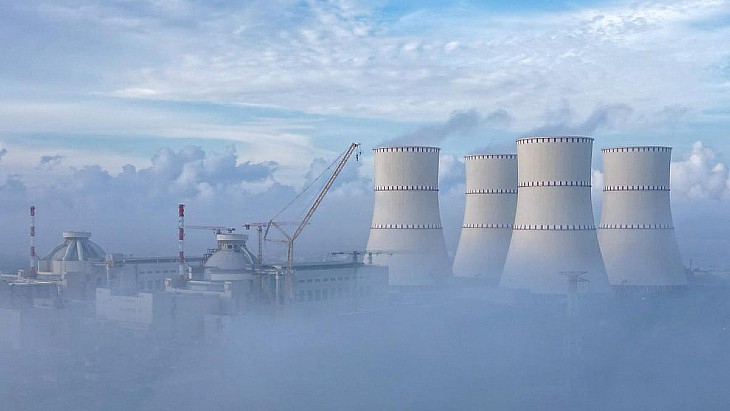
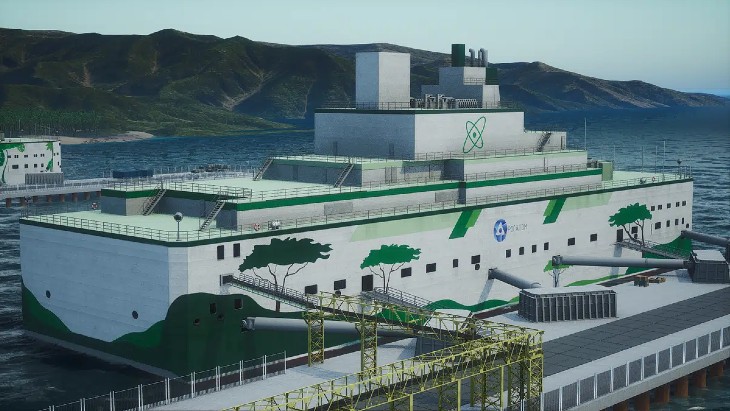
Grid connection for Rooppur's first unit should happen during 2026 (Image: Rosatom)
China will also have a pipeline of projects
It almost feels like a given that there will be new projects and new units in China. They have an enormous pipeline of projects - they will continue to build reactors on time, on budget, and in doing so showcase enormous industrial capabilities. Also, we are looking closely at India’s plans. We are seeing the realignment of some of the laws in India, the Atomic Energy Act and also the liability laws, that are going to hopefully incentivise international cooperation, international participation in the Indian market, because India has incredible ambitions for 100 GW of new nuclear by 2047. India has great capabilities itself, but global contributions could also be fabulous for these ambitions. The changes also encourage more involvement from the Indian private sector, which could be really game-changing.
One of the big issues for the public is nuclear waste
That is true, but I think that in 2026 we are going to see the entering into operation of the geological repository in Onkalo, Finland. I think this will be a key opportunity to show the world that the questions about what to do with nuclear waste and used nuclear fuel are not a technology problem. It is actually most often a problem of policy, politics, and political will. So I think it is great that Finland is being proactive. I think that Sweden is a minute behind, and then France is also very close by. So I think it will be a key year for that part of the fuel cycle also.
April will see the 40th anniversary of the Chernobyl accident
It is always good to look back and make sure that we have really learned all the lessons and taken the opportunities for improvement from previous events. 2026 will also be the 15th anniversary of Fukushima. I think that the industry has been very good at reflecting on these events and extracting all the lessons to be learned. I think that the safety culture at a global level continues to be better than ever. I think that international collaboration has always been great in nuclear, but certainly the collaboration that ensued after Chernobyl, and certainly after Fukushima is a testament to how well the nuclear industry is collaborating. Those were important events. We cannot minimise them whatsoever, but they need to be put in context with the impacts of things like using fossil fuels on human health, on the environment and obviously on climate change. We really need to look at the entire life-cycle of all energy sources and to recognise that there is not one energy source that is a silver bullet for anything. I think that perhaps Fukushima's anniversary and Chernobyl's anniversary will be an opportunity for us as a society to become more pragmatic and realistic about the risks and opportunities of all these technologies.
What do you think are the key planned events for the year?
We hit the ground running at Davos at the World Economic Forum this year, from 19 January - this is perhaps the second time that nuclear energy is really going to be visible there, so we are excited about that opportunity. Immediately after Davos there is India Energy Week in Goa, which is the second-largest energy conference in the world. In March, we will be at CERAWeek in Texas, a very important event where we are bringing together nuclear energy with many of these large energy users, in particular the oil and gas industry, that are really aligning themselves to best understand how nuclear can contribute to their decarbonisation and energising efforts. And then, in April, we will have the World Nuclear Fuel Cycle Conference in Monaco. In May, we will be in Manila at the World Nuclear Supply Chain Conference, and World Nuclear University's Summer Institute will be in the summer in Lyon in France. And of course we will come back together in September here in London for the World Nuclear Symposium, which will be even bigger and better than the one that we did in 2025. We really wanted to bring the nuclear and finance communities together to answer each other's questions and demystify nuclear, so financiers recognise that nuclear projects are nothing more, nothing less, than large infrastructure projects. We are now working together with the finance community to put together a nuclear financing guide to pull together best practices and lessons learned to support financiers and nuclear developers going forward. Later in the year, there will be Africa Energy Week at the end of September in Cape Town, and Singapore International Energy Week is a great opportunity to bring together all those ASEAN countries. There will also be the World Energy Congress taking place in Saudi Arabia and also COP31 in Turkey. So if people thought that 2025 was crazy, I think it is clear that 2026 is looking like it will be just as busy.
So interesting times ahead...
Definitely. This is the time. We've been discussing how the stars are aligning for nuclear energy and I think that we are there. The stars are definitely aligned. This is the moment where we, the global nuclear industry, really need to be proactive and active and make the most of this opportunity. We really need to work together with our governments. We need to work together definitely with the nuclear regulators, with the finance community, with large energy users, and we cannot leave behind civil society. We have seen major improvements in public acceptance and interest in nuclear, but we need to continue to be proactive to engage with civil society, to make sure that no question is left unanswered.


_55605.jpg)