The High-performance Optimised Recycled Nuclear Isotopes for Gen IV reactors (HORNIG) programme is under the US Department of Energy's Advanced Research Projects Agency-Energy initiative. Opened for applications in April, HORNIG supports R&D projects that will deliver commercially deployable technologies that recycle transuranic elements found in existing inventories of used nuclear fuel into fissile materials to fuel advanced reactors. HORNIG builds on previous nuclear energy research programmes supported by the Advanced Research Projects Agency-Energy's history of support for nuclear energy research programmes, including the CURIE (Converting UNF Radioisotopes Into Energy) programme which was launched in 2022.
TRU fuel includes transuranic elements - these are radioactive elements with an atomic number higher than uranium (the heaviest naturally occurring element) in the periodic table of elements. They are formed artificially by neutron capture (and also possibly subsequent beta decay), so are present in used nuclear fuel. Neptunium, plutonium, americium and curium are all examples of transuranic elements.
The High-performance Optimised Recycled Nuclear Isotopes for Gen IV reactors programme "seeks to overcome key technical and economic barriers that have historically prevented the use of TRU fuels in commercial reactors and to create a path to domestic nuclear fuel security by supporting the design, fabrication, and qualification of TRU fuels", seeking to deliver transformative advances in fuel performance, manufacturability, cost, and regulatory readiness. The projects "will design and test TRU-based fuel systems, improve fuel cost and manufacturability, and shorten qualification timelines from decades to less than 7 years".
The eight awardees are:
• Westinghouse Electric Company: USD7 million for its PowerBlock nuclear fuel technology, an approach which combines new fuel architectures with advanced manufacturing techniques to improve fuel performance and expand operational flexibility.
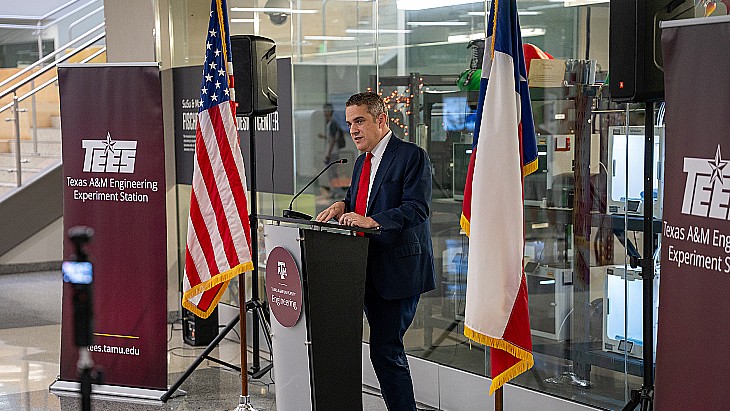
• Texas A&M University: USD5.4 million to develop and test a liquid, thorium-based nuclear fuel salt incorporating transuranics from used nuclear fuel for use in next-generation molten salt reactors.
• Standard Nuclear: USD7 million for its Mixed Oxycarbide (MCO) TRISO: Fuelling Advanced Reactors with Recycled Transuranic and Uranium Feedstock project, which aims to develop tristructural isotropic (TRISO) particle fuel containing recycled transuranic elements for use in high-temperature gas reactors using advancing fabrication methods. The project will support scalable production of TRISO fuel from recycled nuclear materials.
• Oregon State University: USD7 million for a project to make recycled transuranic-bearing nitride fuel for advanced reactors using an innovative low-temperature fabrication process.
• Oklo Inc: USD6.8 million, for its work to develop transuranic-bearing U-TRU-Zr metallic fuel for use in sodium-cooled reactors by advancing fuel fabrication methods, generating qualification-relevant data, and using fuel performance. The project is known as FORGE (Fabrication of Optimised Recycled fuel for Gen IV reactors from Electrorefiner product).
• Exodys Energy Inc: USD1.3 million for a project to develop a common framework for evaluating transuranic fuel feedstocks, fuel-cycle costs, transportation, and deployment requirements across HORNIG fuel concepts, providing economic and logistical data to support the commercialisation of recycled nuclear fuels.
• Sandia National Laboratories: USD3.4 million to provide an "uncertainty-aware decision support capability" associated with scaling transuranic fuel production across HORNIG fuel concepts, helping fuel developers to identify requirements and constraints affecting commercial-scale manufacturing and deployment.
• Idaho National Laboratory: USD7 million for its Irradiation of Molten Plutonium Actinide Chloride fuels and Testing (IMPACT) project to develop and test a chloride fuel salt containing recycled transuranic elements for use in molten salt reactors.
"President Trump has made clear that America must lead the world in nuclear energy, and that requires a strong domestic nuclear fuel supply chain," Deputy Secretary of Energy James Danly said. "By putting existing nuclear materials to productive use, we can strengthen our domestic fuel supply and reduce our reliance on foreign suppliers. These investments will help lower fuel costs, accelerate the deployment of advanced reactors, and ensure American nuclear innovation translates into more affordable, reliable power for American families and businesses."
Westinghouse's PowerBlock technology is designed to advance the traditional nuclear fuel assembly, targeting 24-month fuel cycles at thermal power levels above 4,200 MW. "As utilities look for new ways to maximise output, extend fuel performance and improve plant economics, innovation in fuel technology has never been more important," the company's President of Nuclear Fuel Ben Solich said. "PowerBlock represents a bold new approach to nuclear fuel design, and Westinghouse is well-positioned to utilize our deep expertise in nuclear fuel technology and manufacturing to further advance fuel innovation."
Standard Nuclear said its MCO TRISO initiative, by establishing an alternative to high-assay low-enriched uranium, aims to diversify the fissile feedstock supply chain for existing and next-generation reactors while actively reducing commercial used fuel stockpiles. It is leading the project, and working in partnership with fusion technology company SHINE Technologies.
"Recycled transuranic material still holds a great deal of usable energy, and TRISO is a fuel form well suited to harness it," Standard Nuclear President and CEO Kurt Terrani said. "With ARPA-E's support, we will work to develop the scalable fabrication methods to turn this valuable feedstock into particle fuel, giving developers of advanced or existing reactors a domestic source of fuel made from recycled feedstock."