_47610.jpg)
AFRY was commissioned by the Ministry of Economic Affairs and Employment in November to examine the use of nuclear energy in both electricity and heat production. The analysis covers traditional large-scale nuclear power in electricity production, small modular reactor (SMR) solutions in electricity and heat production, and the extension of the operation of existing nuclear power plants. It assesses the economic viability, technical feasibility, and market impact of these options, and potential support mechanisms to enable the investments.
The study says the construction of an additional 2.4 GW of nuclear power capacity will have a long-term impact on reducing electricity prices once completed. The additional construction will reduce the annual average price of electricity in all scenarios by about EUR5–7 (USD5.8-8.1) per MWh in the years 2040–2060.
"In light of the electricity market scenarios examined, new large nuclear power projects are not profitable on market terms, and their implementation would require significant state support," AFRY said. "Heat-generating SMR solutions have a significantly smaller investment size and may have better conditions for market-based implementation. However, they still involve significant project and implementation risk, which can be reduced, for example, with interest rate subsidies or government guarantees, or with demonstration support for new technology."
The report explores ways for the state to promote traditional large-scale nuclear investments. It suggests that using a risk-sharing model to support a large-scale conventional nuclear power project with a combined output of 2.4 GW could result in annual contract for difference (CfD) costs of EUR330–820 million as well as loan guarantees of around EUR11 billion, depending on the price of electricity.
AFRY estimates that a 300 MW combined heat and power plant based on SMR technology would require an investment of EUR3 billion and a 100 MW SMR heat plant an investment of EUR0.4 billion.
"Heat-generating SMR solutions have a significantly smaller investment size and may have better conditions for market-based implementation," the study says. "However, they still involve significant project and implementation risk, which can be reduced, for example, with interest rate subsidies or government guarantees, or with demonstration support for new technology."
SMR-based heat plants and combined heat and power plants would require significantly fewer subsidies and their funding gap could be covered by aid instruments that only reduce capital costs if the plants are not profitable on market terms, for example.
Extending the operation of existing reactors will generate a significant net benefit in all the scenarios examined, as it will lower electricity prices but will not require state aid, the study says. Safeguarding the current capacity for as long as possible is therefore justified from the cost-benefit perspective, it states. The extension of the operation of Olkiluoto 1 and 2 beyond 2038 and 2050, respectively, is assumed to require investments of about EUR2 billion.
"If the promotion of projects were to begin now, new nuclear power could be available for commercial use in the 2030s," the study concludes.
"I welcome AFRY's comprehensive report on nuclear energy and hope that it will spark high-level discussions in Finland," said Multala. "The report carefully assesses the role of nuclear power in reducing fluctuations in electricity prices and the likelihood of power shortages. I am very pleased that these benefits offered by nuclear power are highlighted in the study.
"Both the Government Programme and the Energy and Climate Strategy, which was submitted to Parliament in December, stress the important role nuclear power plays for Finland. We need nuclear power to guarantee the competitiveness of Finnish industry and to ensure that citizens have access to a supply of reasonably priced energy and heat in all circumstances. This report provides important information for advancing nuclear energy in future. Nuclear power projects are very different in terms of their economy. Their investment costs and profitability vary by type of project. The ministry is prepared to start legislative work to help the placing of new SMR technologies on the market and to continue the evaluation of large projects."
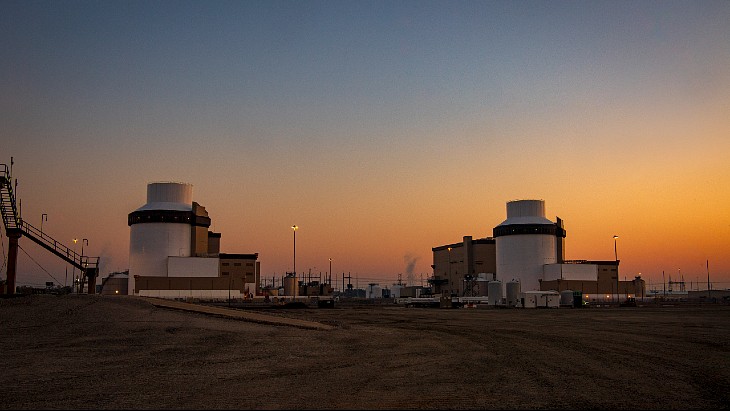
Finland currently has five operating nuclear reactors providing about one-third of its electricity.
Earlier this month, in a move aimed at streamlining regulation and licensing of future nuclear power projects, the Finnish government submitted a proposal to parliament for a new Nuclear Energy Act. The new legislation would introduce more flexible approval, licensing and reporting procedures, which would facilitate the replication of plant solutions and the use of different implementation models throughout the plant's life cycle. At the same time, the reform would support the introduction of new nuclear energy solutions, such as SMRs, and would enable the location of plants closer to energy use. The new law is intended to enter into force on 1 January 2027, which would allow industry players, for example, to apply for a decision-in-principle under the revised rules during this government term.


_51287.jpg)
_82983_12913.jpg)