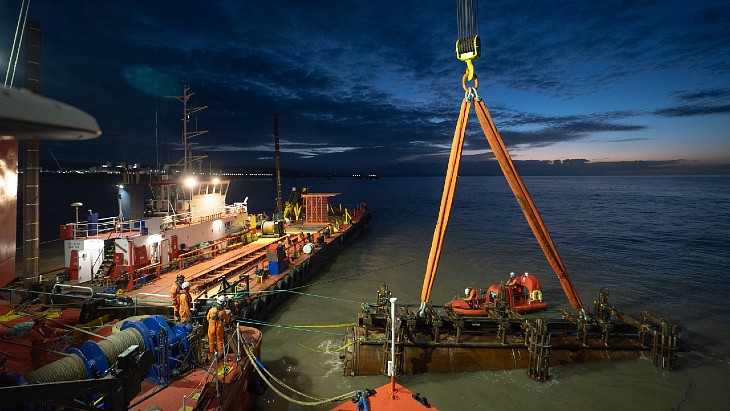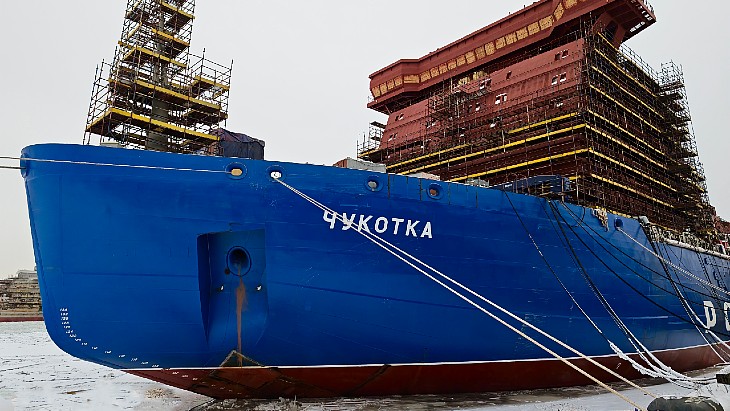
The Chukotka is the fifth of Russia's Project 22220 fleet of nuclear-powered icebreakers, and is being built at the Baltic Shipyard. The keel was laid down in December 2020 and it was launched in November 2024.
The three emergency diesel generators are designed to work instantly and automatically if the reactor's emergency protection system is triggered - they will power the lights and pumps and also provide the power to start the backup generators, which will then provide the ship with power.
Mooring trials, which began at the end of last year, include checking the functionality of all systems and mechanisms.
The Baltic Shipyard described this as "a painstaking process of adjusting thousands of instruments to ensure everything runs like clockwork in the open sea and Arctic ice. After every screw has been checked at the pier, the icebreaker will proceed to the next stage, of factory sea trials".
There is already a series of Project 22220 nuclear-powered icebreakers operating - the Arktika, Sibir, Ural and the Yakutia - and two under construction, the Chukotka and Leningrad. A keel-laying ceremony was held for the next one, the Stalingrad, at the Baltic Shipyard (JSC Baltiyskiy Zavod) in November 2025.
The Project 22220 vessels are 173 metres long, 34 metres wide and with a height from the waterline to the mainmast of 57 metres. They are designed to break through ice up to three metres thick and have a speed of 22 knots in clear water. They are powered by two RITM-200 reactors - a pressurised water reactor with a thermal capacity of 175 MW, which converts to 30 MW at the propellers. It is 7.3 metres high with a diameter of 3.3 metres and an integral layout which its manufacturers say means it is lighter, more compact and 25 MW more powerful than previous generations used on nuclear-powered icebreakers. The service life is 40 years.


_51287.jpg)